From a $20 Garage Sale Loom to Tangible Daydreams
Mar 10, 2026
Marketing
Every artist has a moment when curiosity quietly turns into something bigger. For Melissa, the artist behind Tangible Daydreams, that moment began at a garage sale in the late 1990s.
“I'd been pondering weaving for a while, in a ‘gee, that'd be cool to try’ sort of way,” she said. “Then one afternoon my husband and I were at a garage sale, and the lady showed me a pile of loom-shaped something wrapped in 1970s newspapers.”
The price? $20.
What followed was the beginning of decades at the loom.
“It turned out to be a 4-harness Pendleton floor loom, bench, yarn swift, and warping mill! The next weekend we stumbled across a weaver de-stashing yarn. I figured God sometimes wears cleats, and I had just gotten kicked smack in the butt.”
Armed with a library copy of Learning to Weave, she started teaching herself. Decades later, she’s still learning.
A Creative Magpie
While weaving is her primary craft, Melissa happily admits she loves exploring other creative paths too.
“I keep coming back to weaving, but I like doing all the things,” she said. “I spin, dye, felt, paint, make baskets, do beadwork, and Viking wire weaving. I'm like a magpie, collecting all the shiny bits of knowledge.”
Her artistic journey paused for several years after a discouraging high school art class. It wasn’t until she joined the Society for Creative Anachronism (SCA) that she rediscovered the joy of making.
“There were so many people willing to teach amazing things. I eventually earned my Laurel and thought, ‘Crap. They think I know what I'm doing!’”
That realization led her back to art classes at her local community college, where supportive teachers helped rebuild the confidence she had lost earlier.
Life at the Loom
Melissa’s weaving studio is where creativity settles into a rhythm.
Most afternoons she spends about four hours weaving, often with quiet music playing, sunlight pouring through skylights, and her dog curled up nearby.
She rotates between multiple projects to keep both her mind and body fresh, since weaving involves a lot of repetitive motion.
Her studio currently houses several looms, including three main floor looms she works with regularly:
• Tracey, a portable 4-shaft Ullman loom from the 1970s
• Penny, an 8-shaft Pendleton loom similar to her first garage-sale loom
• Dobby, a massive 24-shaft AVL computerized dobby loom
Moving from traditional looms to the computerized one was a big leap.
“Going from the old manual loom to the air-assisted auto-advance beast is like going from a bicycle to a Harley.”
Despite the technology, the joy of weaving remains deeply physical and meditative.
“My favorite part is throwing the shuttle back and forth and getting into that rhythm. My hands and feet dance, the fabric forms, and time slips away. It’s my moving meditation.”
Color as Inspiration
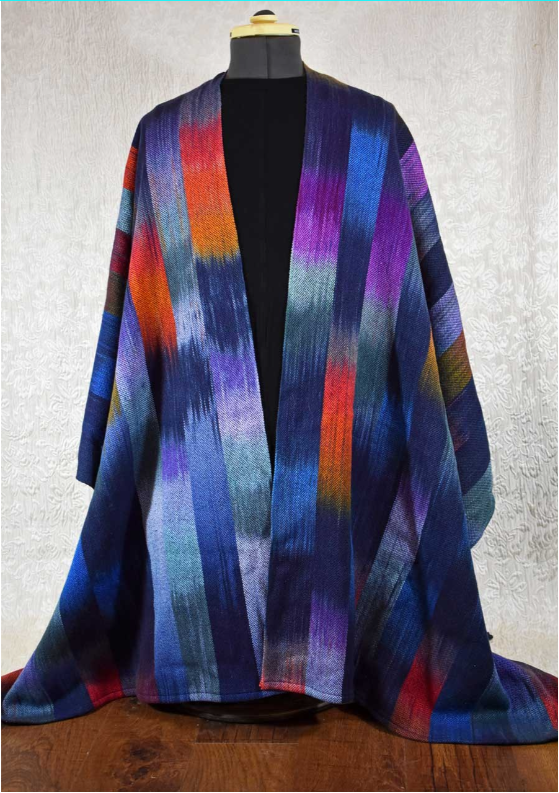
Over time, Melissa has developed a distinctive style centered around color.
“I adore fading from one color to another across a warp, or dyeing the warp yarn so the colors shift as the cloth forms.”
She primarily works with cotton, choosing it for both durability and practicality.
“I like making things people will actually use. Cotton is durable, washable, biodegradable, and comes in a whole range of colors for me to play with.”
She often dyes her own yarns as well, adding another layer of creative control.
“Dyeing your own yarn adds another dimension. It lets you create the exact color story you want in the finished piece.”
Her inspiration frequently comes from the natural world.
She regularly hikes with a camera, capturing landscapes that later become color palettes for her weaving projects.
Blues and greens are her favorites.
“If you peeked in my closet or looked at the walls of my house, you’d see why.”
Beauty With Purpose
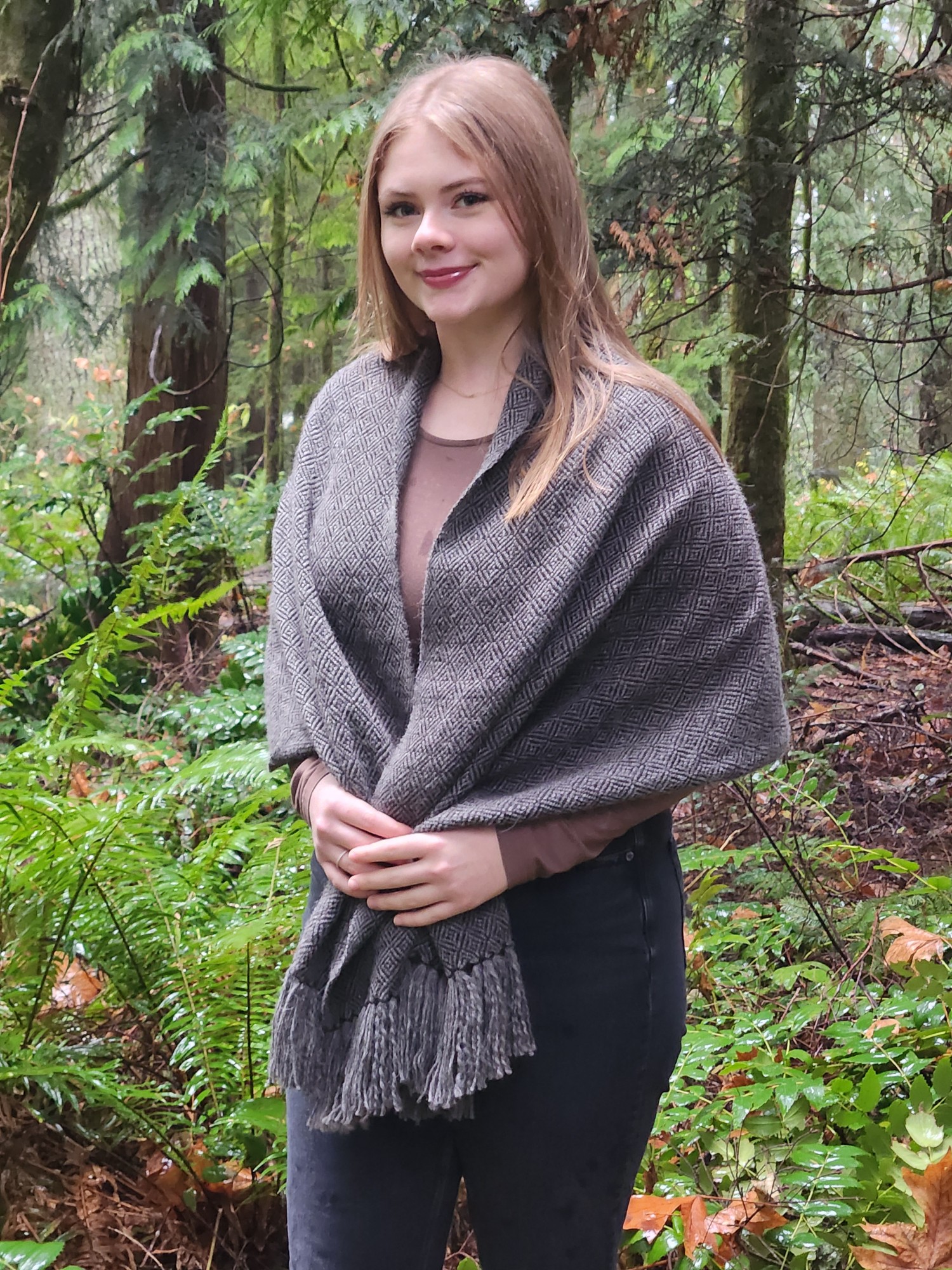
While Melissa creates shawls, ruanas, yarn, and artwork, her favorite item to weave might surprise people.
“Cloth napkins,” she said without hesitation.
Her motivation is sustainability.
“So much of what we use today is disposable. I switched to handwoven napkins years ago to replace paper ones. After using them daily for years, I know they’re durable enough to share with other people too.”
For Melissa, the meaning of art is simple.
“Beauty married to usefulness is meaning.”
In a fast-paced world full of disposable items, she sees handmade objects as something quietly powerful.
“To use something handmade, unique, lovely, and useful feels like a small rebellion.”
Returning to Selling
Melissa has sold her work off and on since the early 1990s. For a time she ran an Etsy shop, but eventually stepped away while moving and building a new studio space.
Now that her studio is fully functional again, she decided it was time to reopen a shop.
When she asked her online community where to sell truly handmade work, one platform kept coming up.
“Overwhelmingly people said Drifa’s Leap.”
So Tangible Daydreams found its new home there.
Advice for Other Artists
Like many creatives, Melissa still wrestles with imposter syndrome.
“My brain flip-flops between ‘legitimate artist’ and ‘just a hobby.’”
But she knows the work matters.
Her advice for artists considering selling their work?
“Do it. Don’t be like me and block yourself for years. The world needs your creativity.”
Her word for this year is flourish.
“And it’s time to let myself do that.”
Explore Melissa’s Work
Melissa’s shop currently features a growing collection of handmade items including:
• Handwoven shawls and ruanas
• Hand-felted juggling balls
• Hand-dyed yarn
• Handwoven napkins and tea towels
Each piece carries the rhythm of the loom and the care of the artist behind it.
Browse Melissa’s work here:
https://drifasleap.com/shop/Tangible-Daydreams